NinoGaming Dice Roll Odds and Mathematical Probabilities
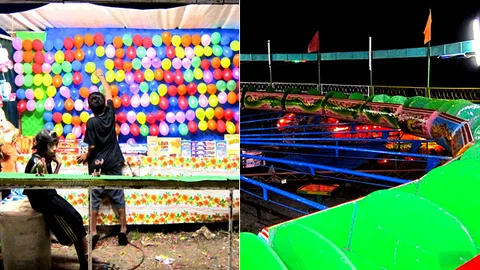
From lively village peryas to regulated digital gaming lobbies, dice remain the world's most enduring symbols of pure chance. Whether rolling numbered cubes in Sic Bo or dropping colorful blocks in the Color Game, the physics of cubes govern every outcome.
Many casual players approach dice tables with superstitions about hot streaks, lucky throws, and overdue colors. In reality, every single shake of the cup is ruled by unyielding mathematical laws that never waver.
The Fundamentals of Six-Sided Die Permutations
The standard six-sided die, known formally in gaming as a D6 cube, represents one of humanity's earliest randomization tools. Each flat square face meets its neighbor at precise ninety-degree angles to ensure equal weight distribution.
Understanding single-die mechanics forms the foundational cornerstone for analyzing more complex multi-dice games like Sic Bo, Craps, and Philippine perya boards.
Equal Sixteen Point Six Seven Percent Probability per Face
On a perfectly manufactured six-sided cube, every face possesses an identical chance of landing facing upwards. Dividing one total outcome by six equal faces gives a probability of 1/6 or approximately 16.67 percent.
This fixed probability holds true regardless of whether the faces display pips numbered one through six, or colors like red, blue, green, yellow, white, and pink. The physical shape of the cube dictates the math, not the paint applied to the surface.
Over hundreds of thousands of independent throws, each individual face will land roughly one-sixth of the total time. Deviations in short sessions represent natural statistical variance rather than altered fundamental odds.
Independent Events: Why Prior Rolls Never Influence Future Throws
In probability mathematics, dice rolls are classified as independent events. An independent event is an outcome whose probability remains completely untouched by whatever occurred in previous trials.
A pair of tumbling dice contains no brain, memory circuits, or mechanical sensors. When you drop three cubes from a carnival funnel, they have zero awareness of which colors landed on the felt thirty seconds earlier.
If the color red lands five times in a row, the probability of red landing on the very next throw is still exactly one in six (16.67 percent). The universe does not owe the table a blue or yellow outcome to restore balance.
Three-Dice Permutations and Clustered Outcomes
When gaming attractions introduce three dice simultaneously, the mathematical landscape shifts from simple single fractions to multidimensional combinations. Three cubes create a total probability space of six multiplied by six multiplied by six, yielding 216 unique permutations.
Analyzing how these two hundred sixteen outcomes cluster together reveals why certain totals and color patterns appear far more often than others.
Why Middle Sums Occur Drastically More Often in Number Dice
In numbered dice games like Sic Bo or Beto-Beto, players frequently wager on the combined sum of the three dice, which ranges from 3 to 18. Casual observers might think every sum between 3 and 18 has an equal likelihood, but the math proves otherwise.
There is only one single combination that produces a total of 3 (1-1-1), and only one combination that produces 18 (6-6-6). That gives extreme scores an occurrence rate of just 1 in 216 (0.46 percent).
Conversely, the middle sums of 10 and 11 each possess twenty-seven distinct combinations out of two hundred sixteen. That gives middle sums a robust occurrence rate of 12.5 percent each, making them twenty-seven times more frequent than a triple one or triple six.
| Outcome Category (Three Dice) | Unique Permutations | Occurrence Likelihood | Game Example |
|---|---|---|---|
| All Three Different Faces | 120 / 216 | 55.56% | Three Unique Colors |
| Exactly Two Matching Faces | 90 / 216 | 41.67% | Pair of Red + Yellow |
| All Three Matching Faces (Triple) | 6 / 216 | 2.78% | Any Specific Triple (0.46%) |
| Middle Sums (10 or 11) | 27 / 216 each | 12.50% each | Sic Bo Big / Small Anchor |
Calculating Likelihoods of Matching Colors in Arcade Blocks
In carnival Color Games, outcomes are categorized not by numerical sums, but by how many faces match each other. Breaking down the two hundred sixteen combinations into matching categories shows how rounds typically resolve.
In 120 out of 216 rolls (55.56 percent), all three cubes land on completely different colors. This is the most common state of the board on any given drop.
In 90 out of 216 rolls (41.67 percent), exactly two cubes land on matching colors while the third cube shows a different hue. This produces a single double match for one lucky color box.
In only 6 out of 216 rolls (2.78 percent) do all three cubes land on the exact same color. If you are backing one specific color like pink, a triple match occurs just once every two hundred sixteen drops on average.
Dissecting the Gambler Fallacy on Dice Tables
The single most dangerous psychological pitfall on dice tables is the Gambler's Fallacy. This cognitive trap causes players to believe that past random outcomes dictate or influence future probabilities.
Recognizing how this illusion operates protects your decision-making and keeps you grounded in mathematical reality.
Why a Color Is Never Due to Hit After Several Misses
Imagine standing at a digital Color Game screen where the color yellow has failed to appear for twelve consecutive drops. Many players will rush to place large wagers on yellow, arguing that it is statistically overdue.
This thinking confuses the overall long-term law of large numbers with the immediate odds of the next drop. The next drop has no physical connection to the previous twelve rounds.
The odds of yellow landing on that thirteenth throw remain precisely 34.72 percent for a single match and 57.87 percent for a total miss. Treating a color as overdue frequently leads players into devastating loss spirals.
Understanding Short-Term Variance Swings Versus Long-Term Averages
Over a substantial sample size of one hundred thousand rolls, the distribution of colors will closely mirror mathematical expectations within a tiny fraction of a percent. This is known as regression to the mean.
Over a typical human gaming session of thirty or forty throws, however, short-term variance dominates. A single color might appear five times in eight rolls, or disappear completely for twenty consecutive minutes.
These temporary clusters are completely normal statistical phenomena, not signs that the game is hot, cold, or malfunctioning. Accepting variance as a natural property of randomness prevents emotional overreactions.
Practical Session Guidelines for Dice Enthusiasts
Enjoying dice games safely requires aligning your playing style with the unyielding mathematics of the game. Because dice games move rapidly, disciplined habits are essential for long-term enjoyment.
Applying structured bankroll rules ensures that short-term variance swings never jeopardize your financial well-being.
Managing Bet Velocity on High-Frequency Dice Rollers
Online dice games operate at extraordinary speed compared to physical carnival stalls. Automated digital tumblers resolve in as little as 12 to 15 seconds per round.
At four rolls per minute, a player makes two hundred forty bets per hour. Even with modest wagers, this high bet velocity exposes your bankroll to the house margin hundreds of times in a single afternoon.
To counteract high velocity, keep your stake sizes very small. Limit individual bets to 1 percent of your total session budget, allowing you to absorb twenty or thirty rounds without exhausting your funds.
Setting Realistic Session Duration Limits
Fatigue and sensory overload degrade strategic discipline over extended sessions. When flashing graphics and rapid sound effects trigger repetitive betting, players often abandon their budget limits.
Set a strict session time limit of 30 to 45 minutes before starting your game. When the timer sounds, log out of the platform regardless of whether you are ahead or behind.
Celebrate small winning sessions by withdrawing profits directly to your GCash or Maya wallet. Locking in returns during favorable variance runs is the single most effective way to enjoy casino entertainment responsibly.
Frequently Asked Questions About Dice Probability
If red has not appeared for 10 rolls, is it more likely to hit next?
No, each roll is completely independent. The dice have no memory of past outcomes, so the probability of red appearing on any single die remains exactly 1 in 6 (16.67 percent) on every single drop.
What is the most common outcome when rolling three dice?
The most common general outcome is rolling three completely different faces. This occurs in 120 out of 216 combinations, which represents approximately 55.56 percent of all three-dice drops.
Are dice games faster than card games in online casinos?
Yes, automated electronic dice shakers typically complete a full betting and outcome cycle in 12 to 15 seconds, making them substantially faster than multi-player card games like baccarat or blackjack.
How do online RNG systems ensure fair dice throws?
Certified online casinos use cryptographic random number generators evaluated by independent testing laboratories like GLI and BMM Testlabs to verify that every virtual face possesses an exact, unbiased probability.
What is the best staking approach for dice games?
The most sustainable staking method is flat betting with 1 to 2 percent of your overall session funds per throw. This shields your bankroll against normal statistical downswings without chasing losses.