NinoGaming Table Games and Traditional Perya Classics
Philippine Table and Perya Games celebrate beloved local traditions, bringing fiesta carnival arcades and neighborhood card rooms directly to your mobile phone.
From the vibrant colored blocks of Perya Color Game to skill-intensive card battles in Tongits, Pusoy Dos, and Lucky 9, players can enjoy certified RNG fairness with wagers from just ₱1.00.








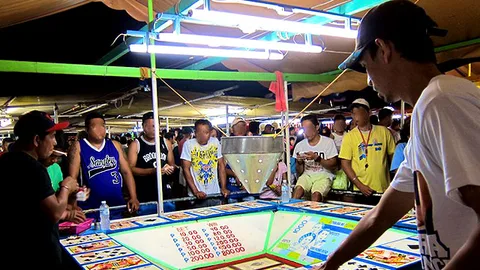
The Evolution of Philippine Fiesta and Street Games
Across towns in the Philippines, annual barrio fiestas have long been synonymous with the energetic glow of the local perya. Under brightly lit canvas tents, carnival barkers toss wooden dice and shuffle weathered decks to the delight of lively crowds.
These street traditions have made a remarkable transition into modern mobile gaming. Players no longer need to wait for yearly festival seasons to experience the nostalgic thrill of their favorite childhood games.
Transitioning from Carnival Tents to Mobile Applications
Early digital conversions began with simple smartphone apps designed for casual entertainment with virtual coins. As mobile connectivity expanded across the archipelago, licensed gaming studios developed regulated real-money editions.
Today, gamers across Luzon, Visayas, and Mindanao can place micro-bets in Philippine Pesos straight through their mobile browsers. Integration with popular e-wallets like GCash and Maya allows instantaneous deposits and rapid cashouts without handling paper bills.
Mobile graphics faithfully recreate the distinctive aesthetic of wooden perya boards, complete with festive soundscapes and cheering audio. This smooth blend of cultural nostalgia and contemporary fintech gives local gaming a fresh, modern home.
Whether relaxing at home or killing time on a daily commute, Filipino players can connect with heritage pastimes in seconds. The games retain their traditional rules while benefiting from crystal-clear touch controls.
Audited Digital RNG Versus Physical Carnival Boards
One of the biggest concerns with informal street peryas was mechanical manipulation, such as weighted dice or tilted wooden chutes. Unregulated carnival stalls often operated with hidden physical biases that quietly reduced player win rates.
Modern online editions eliminate physical tampering by utilizing mathematically certified Random Number Generators (RNG). Independent international testing laboratories audit each game algorithm monthly to guarantee pure statistical randomness.
Every digital dice drop and card deal produces results governed strictly by mathematical probability rather than operator discretion. Players can review round histories and certified Return to Player (RTP) figures directly inside the game interface.
This institutional fairness provides a level of integrity and peace of mind that street carnivals could never offer. Explore the historical evolution in our Traditional Fiesta Games guide.
Beloved Local Card Game Classics
Card gaming in the Philippines is deeply social, woven into casual gatherings, family reunions, and neighborhood sari-sari store hangouts. Bringing these card games into digital lobbies allows players to enjoy strategic competitions with opponents nationwide.
Each discipline presents a unique balance of skill, tactical memory, and card calculation. Understanding core mechanics gives you an immediate competitive edge at digital tables.
Tongits Three-Player Card Melds and Fight Challenges
Tongits is the undisputed king of Philippine card pastimes, played with a standard 52-card deck among exactly three players. The primary objective is to empty your hand or hold the lowest total card points by forming valid melds known as bahay.
Valid melds include sets of three or four cards of the same rank (Three of a Kind) and sequential runs of three or more cards in the same suit (Straight Flush). Players can also lay off matching cards onto opponents' exposed melds (sapaw) to reduce hand point totals.
When you feel your unmelded cards hold lower points than your rivals, you can initiate a Draw challenge (often called a Fight). Opponents can either fold or challenge you to an immediate hand point count.
However, failing to expose at least one valid meld before someone calls a fight results in being sunog (burned), which incurs heavy penalty fees. Learn every strategic nuance in our comprehensive Online Tongits Rules breakdown.
Pusoy Dos Thirteen-Card Shedding Strategy
Pusoy Dos is a fast-paced card shedding game played among four players, where each person receives exactly thirteen cards. The complete goal is simple yet fiercely tactical: be the first player to discard every card from your hand.
Card hierarchy in Pusoy Dos differs sharply from standard poker. The number 2 (Dos) is strictly the highest single card in the deck, with the 2 of Spades being the most dominant card in the game.
Suit strength is also rigidly enforced, following the order: Spades (highest), Hearts, Clubs, and Diamonds (lowest). Players lead singles, pairs, triples, or five-card poker hands, and following players must beat the previous hand with an identical but stronger combination.
Controlling the table flow by winning turns with powerful 2s allows you to dictate card types and dump weak low cards safely. Study winning shedding combinations in our Pusoy Dos Basics tutorial.
Lucky Nine Fast Two-Card Comparisons
Lucky Nine is the Philippine street equivalent of classic baccarat, known for rapid-fire rounds and exciting face-offs against a banker. Players receive two cards and strive to achieve a point total as close to nine as possible.
Tens and face cards count as zero points, Aces count as one, and cards 2 through 9 retain their printed face values. Just like baccarat, whenever card sums reach ten or higher, the tens digit is simply dropped.
A two-card total of 9 is declared a Natural 9, which beats any other score immediately. A two-card total of 8 is a Natural 8, which beats all non-natural hands.
If neither player holds a natural, players can decide whether to draw a single optional third card to improve their score. Discover full tableau comparisons in our Lucky Nine Rules guide.
Iconic Carnival Arcade Games: Color Game and Dice Boards
No fiesta experience is complete without the rhythmic tumbling of blocks in the crowd-drawing Color Game. Digital adaptations capture this vibrant energy with colorful 3D simulations and intuitive touch-betting boards.
The premise is instantly familiar to every Filipino carnival enthusiast. You predict which hues will land face-up when three colored wooden cubes tumble through an overhead funnel.
Three Colored Dice Mechanics and Board Layouts
The board displays six bold color squares matching the six faces of the dice: Yellow, White, Pink, Blue, Red, and Green. Players place their chips onto one or more color boxes during the betting countdown.
Once betting closes, three six-sided cubes drop through an animated funnel chute and roll onto the felt table. The software scans the upward-facing faces of all three dice and highlights winning colors across the interface.
Because three dice are rolled simultaneously, there are 216 total mathematical combinations possible (6 x 6 x 6 = 216). A single chosen color appears on at least one die in approximately 42.13% of all rolls.
This favorable single-match hit rate makes Color Game accessible and immediately enjoyable for casual smartphone gamers. You never have to memorize complex charts or point ladders to understand who won.
Double and Triple Matching Multiplier Payouts
The real excitement of Color Game comes from landing multiple dice showing your chosen color. Payouts scale dynamically based on how many matching dice appear on the felt:
A Single Match (one die matches your color) pays 1:1 even money, returning ₱20.00 total on a ₱10.00 bet. A Double Match (two dice match your color) pays 2:1, returning ₱30.00 total on a ₱10.00 bet.
A Triple Match (all three dice show your color) pays 3:1 on standard carnival tables, returning ₱40.00 total. Some modern enhanced online editions boost triple match payouts up to 5:1, delivering exciting mini-jackpot surges.
Review the full mathematical expectation and house edge in our Perya Payout Rates guide. Understanding payouts ensures you pick table formats that offer the highest return on your entertainment budget.
Understanding House Margins in Casual Local Games
While local card and carnival games feel relaxed and friendly, every casino format incorporates mathematical operating margins. Understanding how platforms monetize games protects players from confusing house fees with unexpected losses.
Whether it is table commissions on multiplayer card pots or built-in dice margins, knowledge is your best shield. A clear view of the math allows you to budget your sessions responsibly.
Table Deductions (Tong) and Commission Rates
In traditional street games, the table host collects a small cut of every winning pot called the tong. This cut covers cards, chairs, lighting, and community venue hospitality.
In digital multiplayer card games like online Tongits and Pusoy Dos, gaming operators deduct an automated rake of 3% to 5% from the final winning pot. Because players compete against other real individuals rather than the house, the rake simply finances server infrastructure and anti-collusion monitoring.
On banker-versus-player games like baccarat and Lucky 9, the house advantage operates through positional priority and rules. Read our in-depth analysis on Banker Advantage and Table Margins to see why acting last is powerful.
Factor these small deductions into your strategy so you evaluate net payouts accurately. Transparent platforms publish their exact rake schedules openly in game rule tabs.
Setting Strict Entertainment Limits on High-Speed Perya Rounds
Digital perya rounds cycle quickly, with dice tumbling every fifteen to twenty seconds on mobile screens. This rapid turnover means you can easily play fifty to sixty rounds in a single short coffee break.
Always establish strict daily deposit caps and firm session timers before launching carnival games. If your entertainment budget for the evening is ₱300.00, play with modest ₱2.00 to ₱5.00 chips to ensure ample playing time.
Never chase unlucky sequences by multiplying your stake sizes on the next roll. Dice permutations have no memory; each tumble remains a completely independent trial governed by pure chance.
Explore mathematical permutations in our Dice Probability Guide. Treat every round as lighthearted recreation, and enjoy the rich heritage of Philippine games safely.
Play Color Game, Tongits, and Pusoy Dos with audited RNG security and instant Philippine e-wallet transactions.
Play Perya Games on Partner PortalFrequently Asked Questions About Table & Perya Games
Yes, audited digital RNG versions run on certified algorithms that prevent the physical magnets and uneven blocks sometimes found at unregulated street fairs.
Online gaming lobbies offer both multiplayer tables where you compete against live Filipino opponents and practice rooms against automated AI software.
The tong is a modest house fee (usually 3% to 5%) deducted from the total pot to maintain multiplayer servers and host live rooms.
Online perya tables cater to casual mobile gamers with minimum wagers starting from as little as ₱1.00 to ₱5.00 per color square.
Yes, all modern table and perya games run smoothly through mobile web browsers like Chrome and Safari without needing heavy app downloads.
Independent Player Resource: NinoGaming provides cultural overviews and mathematical rules for traditional Philippine games. We do not operate gambling services directly.
For responsible gaming guidelines and certified regulatory frameworks in the Philippines, consult the PAGCOR Regulatory Framework.